

 English
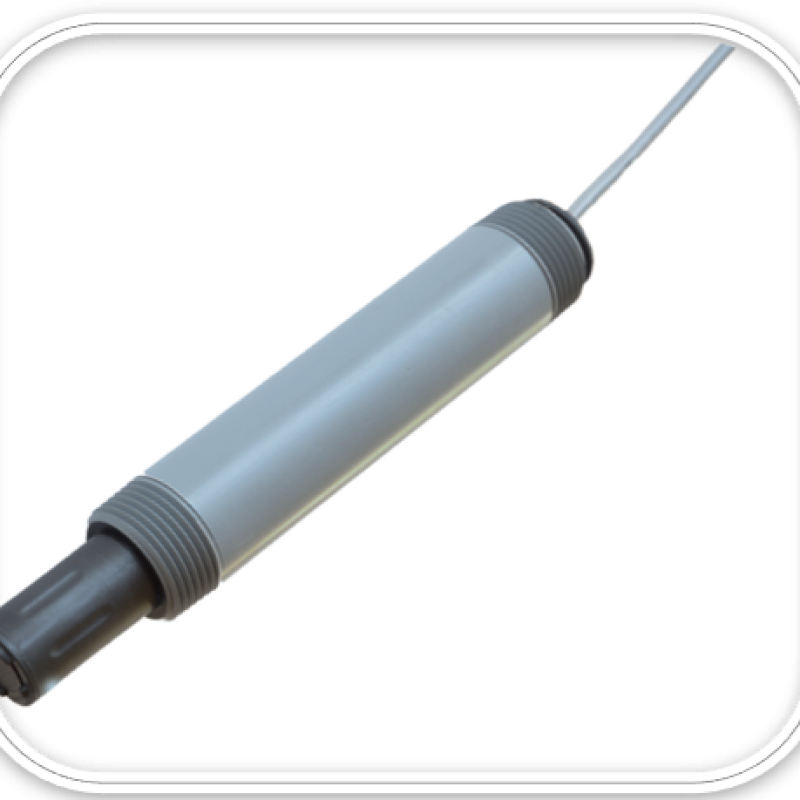
Dissolved oxygen sensor AM-ODO-TX uses optical technology: 0–20 mg/L at ±0.1 mg/L, dual 4–20 mA plus Modbus, and minimal maintenance. See specs.

A dissolved oxygen sensor is at the heart of any water quality monitoring system, from the aeration basin of a treatment plant to a shrimp or fish pond. Dissolved oxygen (DO) drives biological treatment efficiency, animal health and the energy bill for aeration blowers.
This article introduces the AM-ODO-TX from AquaMetrix by Water Analytics – an optical DO probe with built-in digital outputs, built to keep working in harsh conditions.
Dissolved oxygen is the amount of oxygen gas held in water, measured in mg/L (ppm) or percent saturation. A dissolved oxygen sensor measures it continuously and sends the value to a controller or PLC for process automation.
Two technologies dominate the market:
AquaMetrix has built both types for decades. The AM-ODO-TX represents its optical, low-maintenance generation.
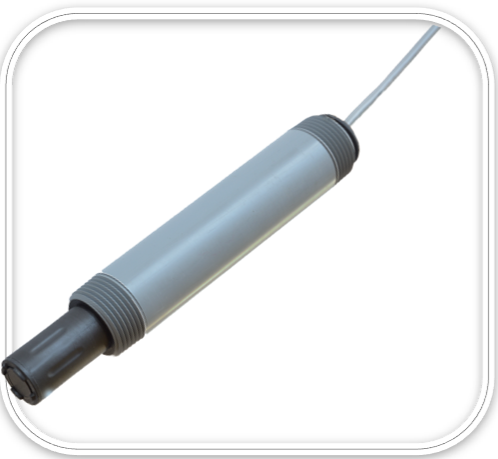
It provides two 4–20 mA outputs plus RS485/Modbus communication. The two analog outputs can carry any two of three values: percent saturation, concentration in mg/L, or temperature.
The probe connects to the AM-2300 controller, the AM-2252 controller (one output only), or straight to a PLC. See the full range of AquaMetrix controllers.
An LED inside the probe excites the luminescent layer on the cap. Oxygen weakens the emitted signal; the electronics measure that change, compensate for temperature, pressure and salinity, and calculate DO.
The method is self-referencing and consumes no oxygen, so it needs no warm-up and no sample flow.
The core technology behind the sensor contributed to the EPA-approved method now used as an industry standard.
|
Parameter |
Value |
|---|---|
|
DO range |
0–20 mg/L (up to 60 mg/L); 0–200 % sat (up to 600 %) |
|
Accuracy (25 °C) |
±0.1 mg/L (0–20 mg/L); ±2 % (20–60 mg/L); temperature ±0.1 °C |
|
Resolution |
0.01 mg/L; 0.01 °C |
|
Response time |
T90 < 45 s; T95 < 60 s |
|
Operating temperature |
–5 to 50 °C (storage –40 to 65 °C) |
|
Max depth / pressure |
210 m (689 ft); 150 psi (0–50 °C) |
|
Salinity & pressure compensation |
Fixed or real-time |
|
Outputs |
Dual 4–20 mA (sourcing); RS485/Modbus |
|
Power |
8–36 VDC; 0.6 W max @ 12 VDC |
|
Wetted materials |
cPVC body, PC/ABS, PPS, PC/PMMA |
|
Ingress protection |
IP68 |
|
Mounting |
1" MNPT both ends; length 7.6" |
|
Cable |
15 ft standard, custom lengths available |
|
Criterion |
Optical (AM-ODO-TX) |
Electrochemical (Clark) |
|---|---|---|
|
Electrolyte |
None |
Yes, replaced periodically |
|
Sample flow |
Not required |
Usually required for stable readings |
|
Start-up |
Under 90 s, no warm-up |
Needs polarization time |
|
H2S interference |
None |
Electrode can be poisoned |
|
Main maintenance |
Cap every 1–2 years |
Membrane, electrolyte, electrode cleaning |
With 1" MNPT threads on both ends, the probe mounts submerged, in-line or via hot-tap insertion. Accessories include the AM-ARM-5 submersion kit, AM-TEE-R5 2" CPVC tee, AM-HTA-R5 ball-valve hot-tap assembly, AM-JB2 junction box and extension cable.
Maintenance comes down to rinsing the cap and swapping it when the VLI signals. Store the probe with the AM-ODO-TX-CAL calibration/storage cap.
For a complete monitoring station, pair it with pH sensors, ORP sensors and conductivity sensors.
Can the AM-ODO-TX dissolved oxygen sensor work in saltwater? Yes. It supports fixed or real-time salinity compensation.
How often is the membrane cap replaced? Typically every 1–2 years; the VLI indicates when.
Does a new sensor need calibration? No. Caps ship with a factory 90-point calibration, and recalibration intervals exceed one year.
If you need a dissolved oxygen sensor that is accurate, rugged and nearly maintenance-free, the AM-ODO-TX deserves a close look. Contact [Company name – phone] for configuration advice and a quote.
