Product details
1. Float Level Sensor (Float Switch)
Float level sensing is a traditional Point Level detection technology. Although it has been available for decades, it remains the preferred choice for overflow prevention and dry-run pump protection applications.
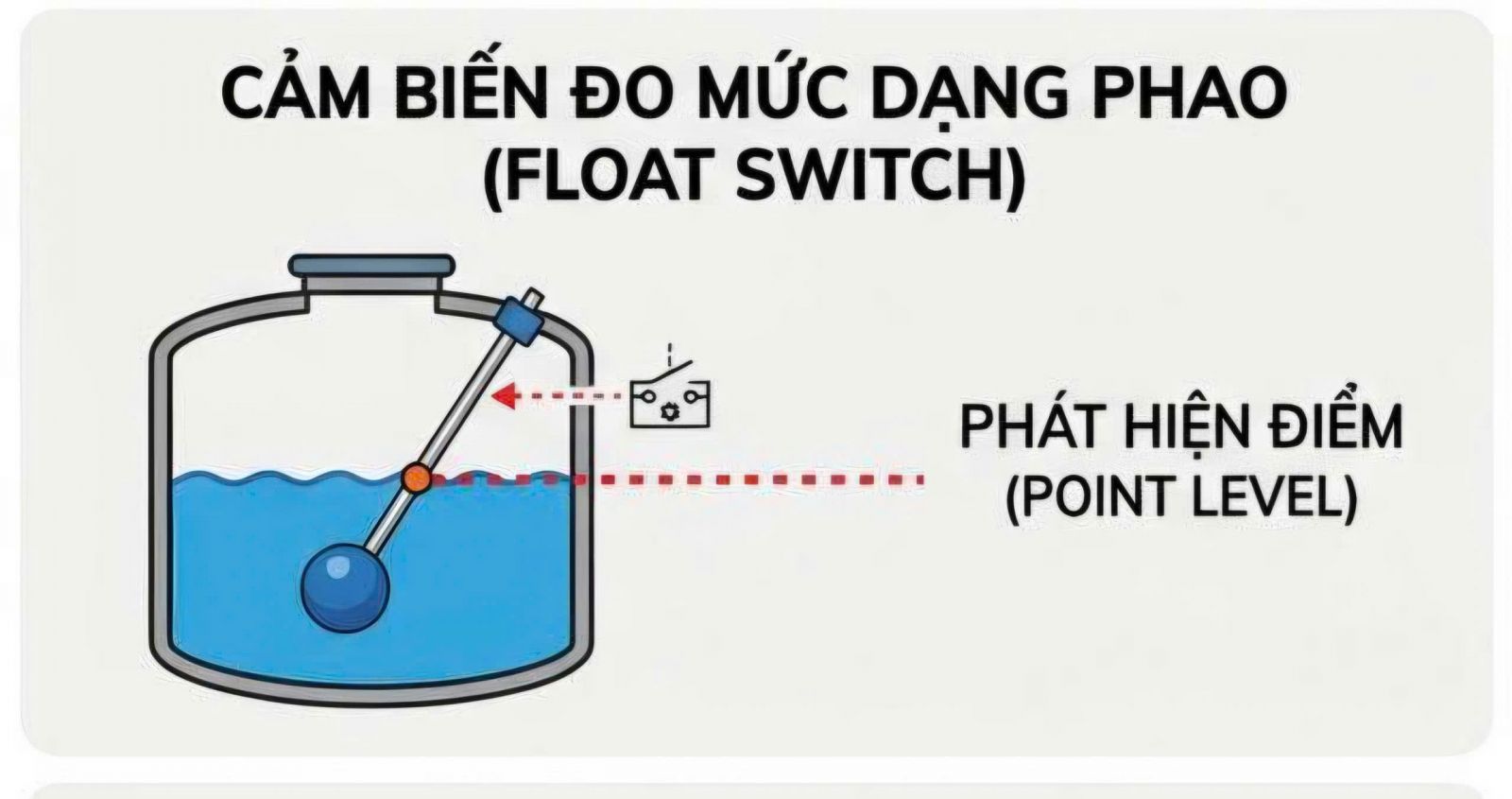
- Operating principle:
The device operates based on buoyancy force. As the liquid level changes, the float moves or tilts at a specific angle (typically ±45 degrees), activating a mechanical or magnetic switch inside to transmit an On/Off signal.
- Specialized applications:
Floats are commonly made from high-grade PP (Polypropylene) plastic or 316L Stainless Steel. In wastewater treatment systems, floats are usually designed as large spherical balls to resist dirt adhesion, while in the food industry, the materials must comply with FDA standards for non-toxic applications.
- Installation considerations:
It is necessary to calculate the dead zone distance — the clearance space required for the float to swing freely — to prevent the float from hitting the tank wall or internal heating elements.
2. Hydrostatic Level Sensor
This is the gold-standard solution for continuous level measurement in open tanks or deep well applications.
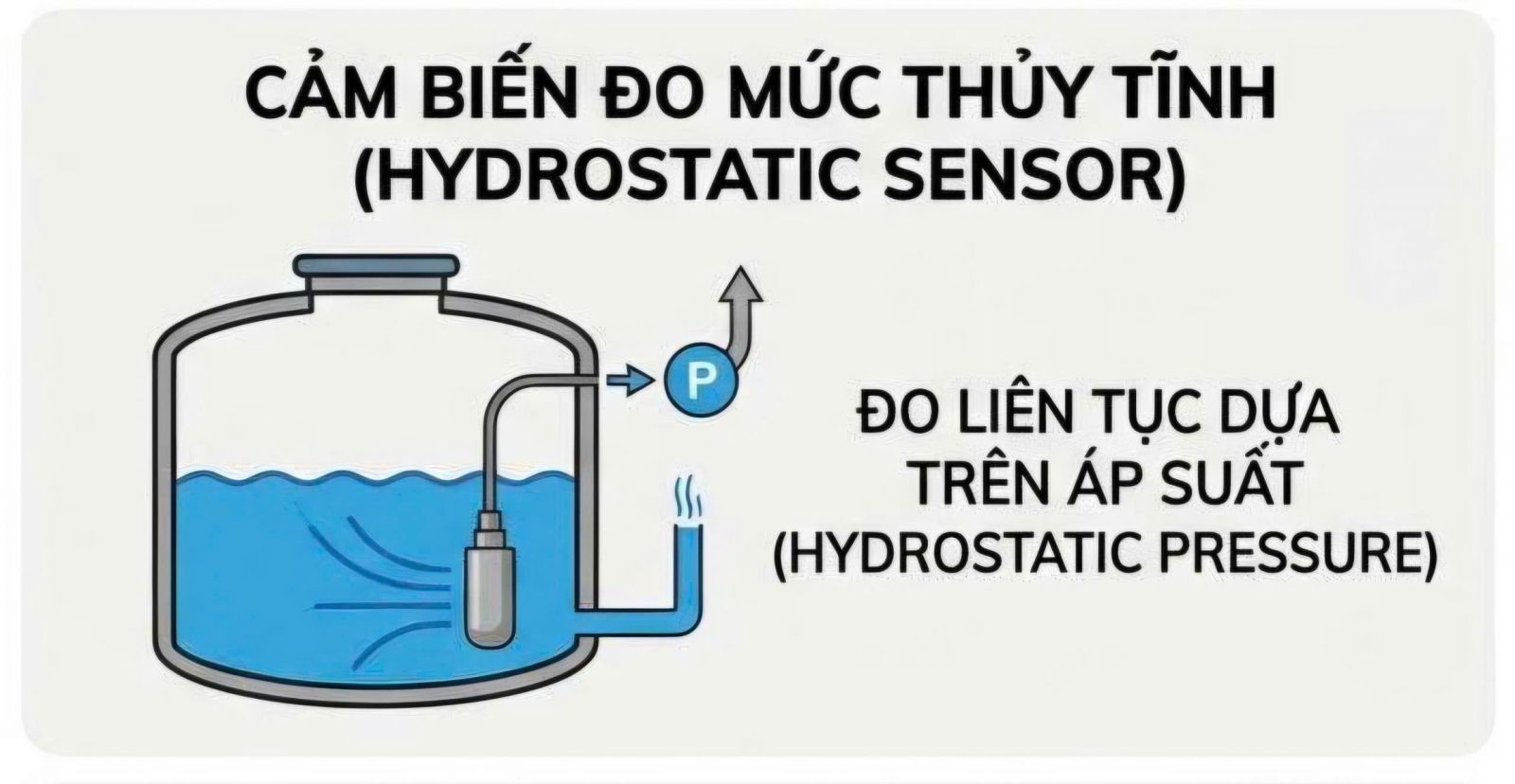
- Operating principle:
The sensor measures pressure at the bottom of the tank. This pressure is proportional to the liquid column height according to the formula:
.png)
(Where: is pressure, is density, is gravitational acceleration, and is liquid height).
- Corrosion resistance capability:
In environments such as electroplating tanks or high-concentration chemicals, the sensor diaphragm is often gold-plated or made from Tantalum material to prevent electrochemical corrosion.
- Competitive advantages:
- Unaffected by foam or surface agitation.
- Extremely high sensitivity with low measurement error.
- Manufactured with premium materials such as Ceramic or PVDF, capable of withstanding highly corrosive chemicals in electroplating and wastewater treatment industries.
3. Ultrasonic Level Sensor
Ultrasonic technology is the most popular and cost-effective non-contact continuous measurement solution, helping prevent damage caused by corrosive chemicals.
.jpg)
- Operating principle:
The sensor emits sound wave pulses from the top of the tank. The waves reflect off the liquid surface and return to the transducer. The device calculates the Time-of-Flight to determine the exact level distance.
- Key advantages:
- No direct contact with the process fluid, extending equipment lifespan.
- Integrated volume calculation algorithms for various tank geometries (vertical cylindrical, horizontal cylindrical, spherical tanks).
- Special feature:
Supports Open Channel Flow measurement for Parshall flumes or weirs in wastewater treatment systems.
- Important note:
Performance may decrease in environments with heavy dust, fine foam, or excessively dense vapor.
4. Radar Level Sensor (Radar Transmitter)
If ultrasonic uses sound, Radar uses light (electromagnetic waves). This is currently the most powerful technology in the measurement industry.
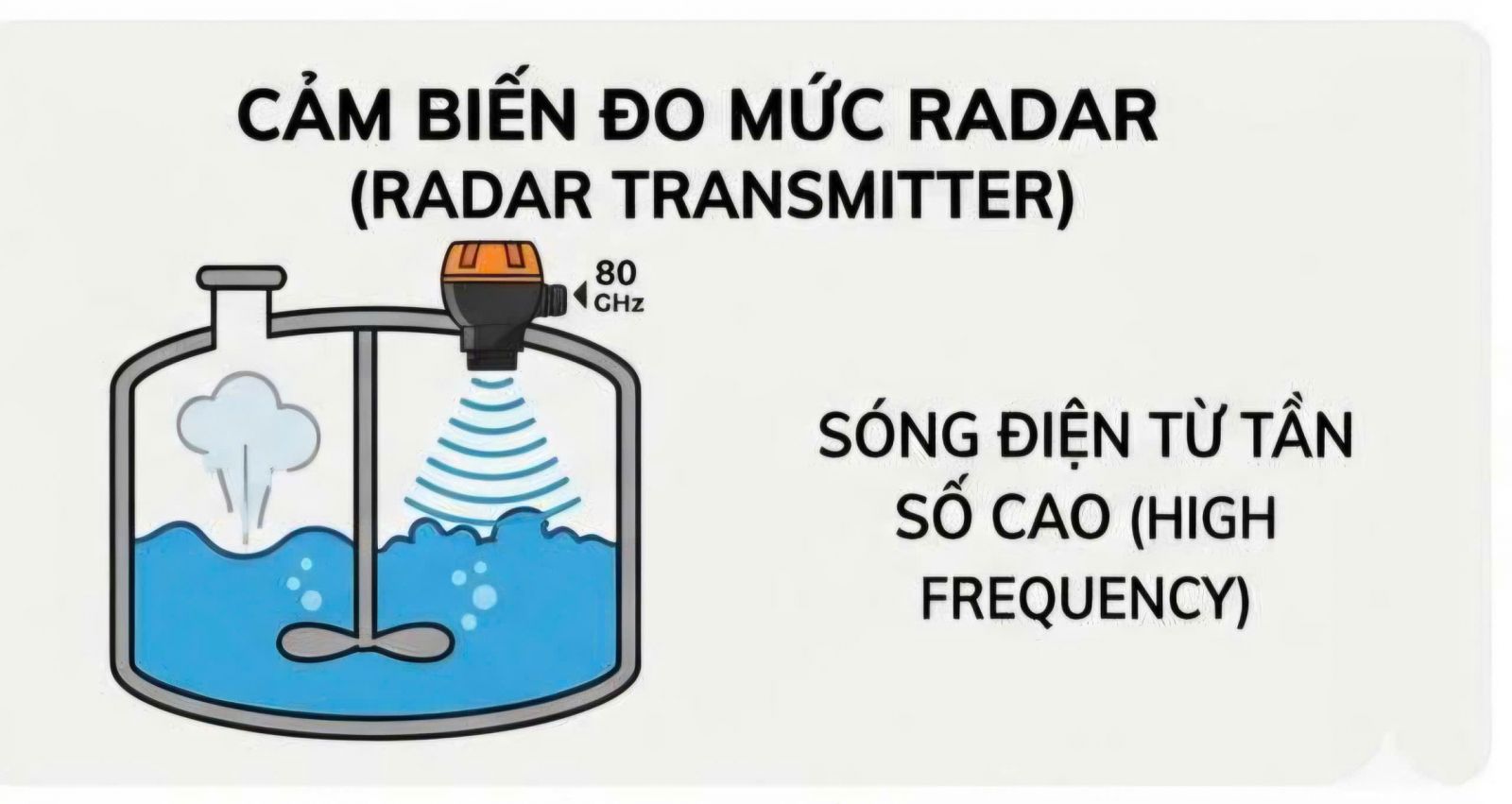
When other technologies reach their limits due to temperature, pressure, or contamination, Radar becomes the ultimate solution.
- Operating principle:
Uses high-frequency electromagnetic waves (up to 80 GHz). Radar waves can penetrate vapor and dust and are unaffected by changes in density or air pressure.
- Types of Radar sensors:
- Non-contact Radar: Offers absolute accuracy (measurement error as low as ±2 mm), ideal for high-pressure chemical tanks.
- Guided Wave Radar (GWR): Uses a probe rod to guide the signal, providing exceptional stability in tanks with turbulent surfaces or thick foam layers.
- Applications:
Commonly used in oil & gas, chemical industries, and tanks containing low dielectric constant materials.
- Probe-guided stability:
Extending the probe into the tank helps guide the signal, ensuring 100% stable signal reflection and reception.
Environmental durability:
Radar is completely immune to dust, chemical vapors, and sudden changes in temperature or pressure. It is the mandatory choice for high-pressure boilers or hot asphalt storage tanks.
Conclusion
Selecting a level measurement solution at Origin Pipe is not simply about purchasing a device — it is about choosing a safe and reliable engineering solution. We provide a complete range of sensors from economical to premium segments, along with professional support services for error calculation and material selection tailored to each specific chemical application.


